
Online conversations about Tacoma recovery gear often begin with a simple question: What should I carry? The most useful answer is not a shopping list. It is a system.
A kinetic rope, winch, soft shackle, recovery ring, or receiver-mounted recovery point can each be valuable. But no single component makes a recovery safe. Every part must suit the vehicle, the type of recovery, the available attachment points, and the other equipment in the load path.
That system-first approach addresses the issues drivers repeatedly encounter when assembling a recovery kit: confusing towing with recovery, attaching gear to an unrated point, selecting components by breaking strength alone, and buying equipment without learning how it should be used.

Start With the Recovery Points
Before choosing a rope or strap, identify where both vehicles can be connected safely.
A transport tie-down, bumper opening, tow ball, or convenient piece of suspension hardware is not automatically a recovery point. Dynamic recoveries can generate substantial forces, and an unsuitable attachment can fail and become a dangerous projectile.
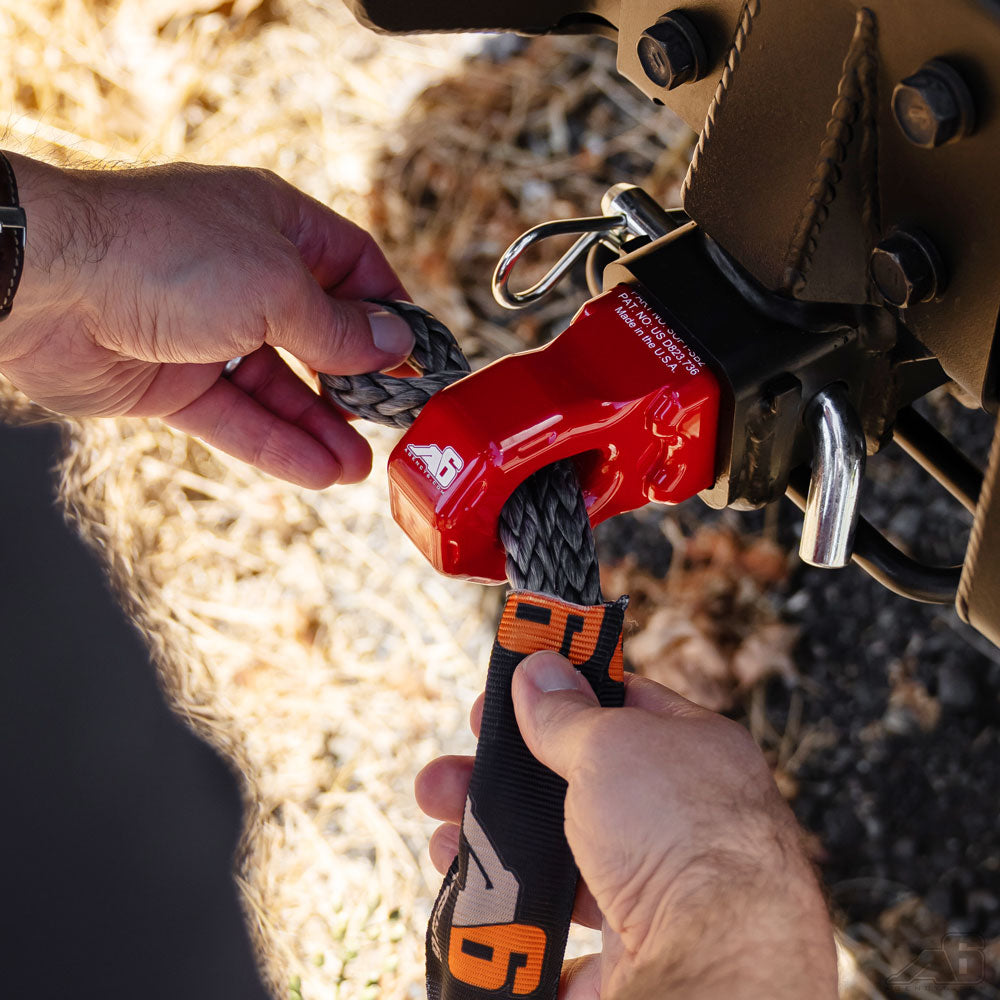
For Tacomas equipped with a properly installed, frame-mounted 2-inch receiver, the Agency 6 Soft Shackle Recovery Block creates a dedicated connection point at the rear of the truck. Its smooth, oversized opening is designed for soft shackles, while the block is CNC-machined in the USA from 6061-T6 aluminum. The current product listing specifies a 19,000-pound working load limit.
The important distinction is that a recovery block does not upgrade the receiver, hitch pin, vehicle frame, or mounting hardware around it. The safe capacity of the assembled system is always limited by its weakest component. Confirm the receiver and vehicle manufacturer's limits before use.
At the front of the Tacoma, use only a properly engineered, frame-mounted recovery point or winch system installed according to its manufacturer's instructions. Never assume the factory transport loops are approved for a dynamic pull.
Choose the Rope for the Vehicle and the Job
Not all ropes and straps behave the same way.
A tow strap is intended for a controlled tow and generally has little stretch. A kinetic recovery rope is designed to stretch, store energy, and deliver a smoother pull to free a vehicle stuck in sand, snow, or mud. Because it stores energy, it also demands more careful setup, clear communication, and properly rated attachment points.
Rope selection should be based on the actual loaded weight of the stuck vehicle—not simply the fact that it is a Tacoma. Armor, campers, bed racks, spare fuel, tools, and travel gear can add significant weight.
Agency 6 offers different Yankum kinetic-rope sizes for different vehicle ranges. The 7/8-inch by 20-foot kinetic rope is the more relevant size to evaluate for many midsize-truck applications, subject to the manufacturer's current vehicle-weight guidance. The larger 1-inch by 20-foot rope, rated at a 33,500-pound minimum break strength, is listed for vehicles weighing 6,700 to 11,200 pounds and may be oversized for a lightly loaded Tacoma.
Bigger is not automatically better. An overly stiff rope may not stretch as intended behind a lighter vehicle, reducing the benefit of a kinetic recovery and increasing shock loading. Match the rope to the vehicle-weight range specified by the rope manufacturer.

Use Soft Shackles Where the Interface Is Appropriate
Soft shackles reduce the amount of heavy metal in the recovery system and are easy to store. The Agency 6 7/16-inch Soft Shackle is made in the USA from 12-strand UHMWPE rope and lists a 45,500-pound minimum break strength.
That does not mean a soft shackle can be wrapped around any available metal edge. Synthetic fibers can be damaged by burrs, sharp corners, heat, contamination, and abrasion. Use soft shackles only on smooth, closed, compatible recovery points, and inspect the contact surface before connecting them.
Soft shackles are particularly well matched to the radiused opening of the Agency 6 Soft Shackle Recovery Block. Carrying at least two appropriately rated connectors also gives the driver more setup options when another vehicle has a different recovery-point design.

Understand WLL Versus Minimum Break Strength
One of the most important lessons in recovery equipment is that working load limit and minimum break strength are not interchangeable.
-
Working Load Limit (WLL) is the maximum load the manufacturer permits during normal service under specified conditions.
-
Minimum Break Strength (MBS) is the force at or above which a new component is expected to fail in a controlled test. It is not the recommended working load.
Do not compare a component's WLL directly with another product's MBS as if the figures mean the same thing. Follow each manufacturer's instructions and base the complete system on the lowest applicable rating.
Add Winch Capability for Solo and Controlled Recoveries
A kinetic rope requires a second vehicle and enough safe space for that vehicle to move. A winch can be the better tool for a solo recovery, steep terrain, precise repositioning, or a situation where a running start would be unsafe.
The Agency 6 Recovery Ring 5.0 is a compact alternative to a traditional pulley block for compatible synthetic winch rope. It is CNC-machined from 6061-T6511 aluminum, has a listed 24,000-pound WLL, and accepts synthetic rope up to 1/2 inch or 12 mm. A recovery ring can help redirect a pull or form part of a mechanical-advantage setup, but it must be rigged correctly with a compatible soft shackle and an adequately rated anchor.
When anchoring to a healthy tree, protect both the tree and the winch line with a wide tree-saver strap. The Agency 6 3-inch by 8-foot Tree Saver Strap is made from low-stretch webbing and lists a 46,500-pound minimum test strength. Never wrap a bare winch line around a tree.

Recovery Gear Should Solve the Easiest Problem First
The best recovery often uses the least force. Before connecting a rope or winch:
-
Stop wheelspin and assess why the truck is stuck.
-
Dig material away from the tires, axles, frame, and differential.
-
Reduce resistance and improve the intended exit path.
-
Use traction boards when they can restore grip without pulling.
-
Air down when appropriate, while staying within safe tire and wheel limits.
-
Escalate to a controlled tow, kinetic pull, or winch recovery only when needed.
A shovel, traction boards, tire-repair supplies, an air compressor, gloves, and a recovery damper may not attract the same attention as machined hardware, but they often make a recovery safer and easier.
A Practical Tacoma Recovery Kit
For a Tacoma traveling with other vehicles, a well-rounded kit may include:
-
Verified front and rear recovery points
-
A kinetic rope matched to the truck's loaded weight
-
Two rated, compatible soft shackles
-
A receiver recovery block, when using a verified frame-mounted receiver
-
Traction boards and a shovel
-
Tire deflator, pressure gauge, and air compressor
-
Gloves and a recovery-line damper
-
A clearly organized storage bag
For solo travel or more technical terrain, add:
-
A properly sized and installed winch with synthetic line
-
A recovery ring and compatible soft shackle
-
A tree-saver strap
-
Additional rigging suited to the expected terrain
The Component Is Only as Good as the Recovery Plan
Premium components help create a predictable load path, but equipment cannot compensate for an unsafe attachment point or poor technique. Before loading the line, agree on one recovery leader, establish hand or radio signals, clear everyone from the danger zone, keep spectators out of line with the recovery path, and use slow, deliberate inputs.
Inspect ropes, straps, shackles, pins, winch line, and recovery points before and after every use. Retire equipment with cuts, glazing, deformation, corrosion, chemical damage, or other signs that exceed the manufacturer's inspection criteria.
The real takeaway is simple: do not build a Tacoma recovery kit around isolated products. Build a compatible system around the truck's loaded weight, rated attachment points, likely terrain, and the recoveries you are trained to perform. Agency 6 components address that need with dedicated receiver recovery points, lightweight soft-shackle interfaces, vehicle-specific rope choices, and compact winch-rigging hardware—but the safest part of the system will always be a prepared operator who knows when and how to use it.
Safety note: Vehicle recovery is inherently hazardous. This article is general education, not a substitute for product manuals or hands-on training. Follow the vehicle, winch, rope, and hardware manufacturers' instructions. Never exceed the lowest applicable rating in the complete recovery system.

FAQ
What recovery gear should a Toyota Tacoma carry?
At minimum, carry verified recovery points, a kinetic rope matched to the Tacoma's loaded weight, compatible rated shackles, traction boards, a shovel, gloves, and tire-inflation equipment. Solo travelers should also consider a properly installed winch, recovery ring, and tree-saver strap.
Can I use a Tacoma receiver hitch as a recovery point?
A properly installed, frame-mounted receiver may support an appropriate receiver recovery block, but capacity depends on the receiver, mounting system, hitch pin, vehicle structure, and recovery hardware. Never use a tow ball for vehicle recovery.
Are soft shackles safer than steel shackles?
Soft shackles are lighter and contain less metal, but they are not safe on sharp, rough, or unsuitable attachment points. Use them on smooth, compatible recovery points and inspect them before every use.
Is a kinetic rope the same as a tow strap?
No. A kinetic rope stretches to store and release energy during recovery. A tow strap has much less stretch and is intended for controlled towing. Each must be used only for its designed purpose.
Do I need both traction boards and a winch?
They solve different problems. Traction boards can restore grip with minimal force, while a winch supports controlled self-recovery when traction aids are insufficient. Carry equipment appropriate to the terrain and whether you travel alone.